By: Silvia Davi
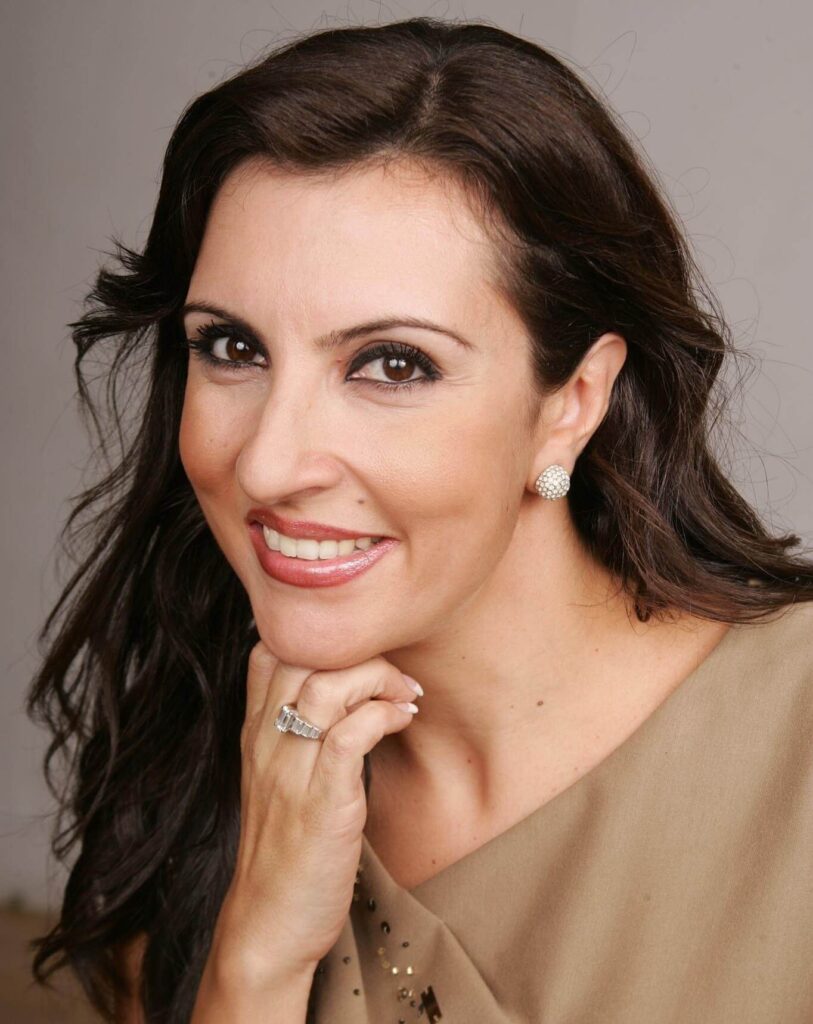
Presenter: Donatella Bianchi

This past August, during my annual Italian family vacation, I was thrilled to return to the gorgeous blue-zone island of Sardinia—a place I had long hoped to revisit since my first trip in 2009. This visit carried an added layer of meaning: not only were we headed back to Sardegna, the second-largest island in the Mediterranean, but we were returning as a family of four. The last time I set foot on the island, I was pregnant with my son Matteo, a name inspired by a moment on a Sardinian beach that stayed with me ever since.

For this trip, we focused on the island’s northern coast, spending extended time in Santa Teresa Gallura, a charming town known for its pristine beaches, tranquil atmosphere, and ideal location for exploring the Maddalena Islands and nearby Corsica.

After a beautiful day spent sailing around the Maddalena archipelago, we wandered through Santa Teresa’s streets before heading back to our hotel and popped into a small shop selling local Sardinian products. To my surprise, I recognized a well-known Italian RAI television presenter whose coastal program I have been watching for years from New York. Discovering that the shop belonged to her family, I introduced myself, and we soon found ourselves in warm, engaging conversation.
It was a delight to hear her personal recommendations on Sardinia’s striking coastline—where she spends her summers—as well as on her native Liguria, another region close to my heart and home to beloved Riviera destinations such as Portofino and the Cinque Terre.
What began as an impromptu encounter in a Sardinian shop evolved into an ongoing connection once I returned home, ultimately leading to this opportunity to share with readers an inside look at her career, background, and guidance for Italian Americans regarding the beautiful seaside coasts.
1) As a prominent Italian journalist, writer, and television presenter, best known for hosting “Linea Blu,” on RAI 1, which explores Italy’s beautiful coastlines, maritime culture, and environmental issues, describe what aspect of your work you are most passionate about?

I was born in a seaside city, La Spezia, in the heart of the Cetacean Sanctuary, the largest Marine Protected Area in the Mediterranean, created for marine mammals. Bringing the culture of the sea to a wide television audience has been my mission since 1994, when Linea Blu was created, and it is still the challenge that fascinates me the most today.
We know and frequent space, the moon, Mars, and the mysterious planets, but not the abysses. The underwater dimension is a world yet to be explored, and yet it is already at the center of political, economic, and military interests, an invisible world fundamental for the ecosystem services essential for the life of our species on the planet. I observe and tell the story of the earth seen from the sea, an unusual perspective. I remember a beautiful special episode filmed in New York in 2017 to celebrate the arrival of the Vespucci ship, our flagship sailing vessel of the Italian Navy, after its transatlantic crossing. I remember the transfer under the Verrazzano Bridge, the emotion in the eyes of the young cadets in front of Ellis Island, the Statue of Liberty, and the city skyline. That time I told the story of New York seen from the water, going up the Hudson and the East River, discovering an unexpected community of seafaring people.
I bring the voice of the sea into people’s lives, the beauty, and lesser-known wonders of the world’s seas, which are now in danger. But what excites me most is the extraordinary humanity of the men and women of the sea, fishermen, sailors, and divers.
2) Italians, Italian Americans, and Italian’s all over the world who have access to RAI Italia, have enjoyed your show, which has inspired people to visit some less explored Italian coastlines. For those not familiar with the show, what is the objective of the “Linea Blu” show? And what has been the secret to its long-term success?
Linea Blu’s motto is “Above, below, and around the sea.” It was a brilliant intuition by Marco Zavattini, one of our long-standing writers, and perfectly summarizes the program’s mission. We tell the story of the territory as seen from the sea, from the sky, and underwater, where everything is connected. The underwater mountains, volcanoes, currents, and winds that shape the Italian coasts and make them unique. Ours is a declaration of love that we renew every Saturday for thirty years, made up of images created with innovative and high-quality systems, careful musical choices, and meticulous editing. We take care of every detail so that the beauty of the landscape becomes the ideal setting for our interviews. We tell the story of our Mare Nostrum, the cradle of the greatest civilizations of the past, the marine biodiversity along with that of the peoples and cultures that overlook our sea. History, archaeology, fishing, tourism, economics, gastronomy, and sports are just some of the topics we cover.
3) I had the pleasure of recently meeting you in Sardinia, in Santa Teresa Gallura, where you reside part-time, what made you select Sardinia? And particularly, Santa Teresa Gallura?

I have a great passion for islands, especially the smaller ones. I am an honorary citizen of Ustica, Lampedusa, and Santa Teresa Gallura. Here in Sardinia, I met Tommaso, my husband; we share a great passion for the sea and nature, and it wasn’t difficult for this land to win me over. Santa Teresa is a quiet town overlooking the Strait of Bonifacio, the strait that separates Sardinia from Corsica, and is strategic for those who want to discover northern Sardinia, as well as being opposite the Maddalena Archipelago. It is a tourist destination, but unlike other nearby areas, such as the Costa Smeralda, it has an important history because it was founded in 1808, and a stable, vibrant community both in summer and winter.
4) Sardinia is known for its gorgeous beaches, interesting culture, and way of life – recognized as the first blue zone, can you describe its unique appeal?

Sardinians are fortunate because they inhabit a true earthly paradise, but they have been able to preserve it. It is made up of granite coasts, a still wild hinterland that unfortunately risks depopulation, where identity is a collective heritage. It is the island of longevity, of the oldest monumental trees, of prehistoric Nuragic dwellings in excellent condition, of the scents of the Mediterranean scrub that mark the seasons.
The climate crisis and the loss of habitat and biodiversity are severely testing the planet, and the areas that have remained intact and wild today have immense value. The new challenges require a new collective consciousness, and in Sardinia, certain values are deeply rooted in the ancestral culture of its people.
5) You are originally from Liguria, another beautiful region with scenic coasts and rich history, do you go back often?
Yes, Liguria is a splendid balcony overlooking the sea and owes its richness to its numerous ports and harbors, to the seafaring vocation that has made the Ligurians a people of shipowners, sailors, and navigators. My brothers still live in La Spezia; my roots are there. Until a few months ago, I had the honor of being the President of the Cinque Terre National Park, the smallest, but most prestigious, protected area among Italian and European, visited by over 4 million tourists every year from all over the world. This brought me to La Spezia very often.
6) What message would you like to communicate to the many Italian American readers about the Italian coastlines and maritime culture?
Just a few essential messages. The first: Let’s learn to look at the ocean and the sea as a volume, with its landscapes and inhabitants, not just as a surface or a pleasant summer destination.
Seen from the moon, the planet Earth is blue, because it is predominantly covered by the sea.
Finally, we can all do something to protect it, and we can do it with our everyday behaviors, for example by reducing the use of plastic or reducing consumption and recycling what is possible. Mother Teresa of Calcutta said, “What we do is only a drop in the ocean, but if we didn’t do it, that drop would be missing from the ocean.”
7) Any other interesting projects you are currently involved in?
From 2014 to 2023 I was President of Worldwide Fund (WWF) Italy. Since then, I continue my commitment as an advocate for the green transition, the blue economy, and the culture of the sea, participating in conferences and workshops. We are preparing the next season of Linea Blu and I am working on my fourth book, which I hope to complete by next spring.
But my most important project remains my family, which remains the true priority of my life, therefore winter is the season for travel and breaks from work, but always discovering the blue world.
###
Get in Touch
Contact us at RenMindsPress@gmail.com, or use the contact form below.
A Global & Renaissance Mindset